Summit County Real Estate Insights

I’m Tucker Zimmerman, a Summit County Realtor based in Frisco and an Associate Broker with Slifer Smith and Frampton. This blog covers the trends, neighborhood updates, regulatory changes, and practical guidance that shape buying and selling in Frisco, Breckenridge, Silverthorne, Dillon, Keystone, and Copper Mountain.

You will find clear explanations of local market data, short term rental updates, new construction activity, seasonal demand patterns, and the everyday nuances that influence property values in the mountains. My goal is to give you straightforward information you can use whether you own a home here or are considering one.

If you ever want context behind the numbers or help comparing neighborhoods, reach out anytime. I’m always glad to share local insight.

Contact Tucker Zimmerman
Associate Broker, Slifer Smith and Frampton
Phone: 303 907 9129
Email: TZimmerman@SliferSummit.com
Website: SoldInSummit.com

Aug. 25, 2026

15 Things I Would Do Before Selling a Summit County Property

By Tucker Zimmerman, Slifer Smith & Frampton Real Estate

If I were getting ready to sell my own property in Summit County, I wouldn't start with a list price or a sign in the yard. I'd start by looking for objections.

What is a buyer going to notice? What are they going to question? What might show up during inspection? What could make them choose another property instead?

That's really the point of good pre-listing preparation: remove as many objections as you reasonably can before buyers ever have a chance to make them.

That doesn't mean remodeling everything in sight. In fact, one of the biggest mistakes sellers make is spending money on projects that aren't going to come back to them in the sale. Sometimes a professional cleaning, a few minor repairs and $300 at Target will do more for you than a major renovation.

And sometimes the smartest preparation has nothing to do with the physical property. It might mean waiting a few months to sell because you're about to compete against a pile of similar properties.

Whether you're selling a condo, townhome or single-family home, these are 15 things I would consider before putting a Summit County property on the market.

1. Assess the market before deciding when to sell

People often ask me for the best time of year to sell in Summit County.

There are seasonal patterns, but I think there's a better question:

What will I be competing against if I list right now?

I recently received a call from an owner considering selling a two-bedroom condo near Lake Dillon in Frisco. I pulled up the market while we were talking.

There were 34 two-bedroom condos for sale in Frisco. Five were in the Lake Dillon area alone, and four of those five had garages.

His condo doesn't have a garage.

If we put his property on the market right now, buyers have a lot of alternatives, and several of the most directly comparable properties have a feature his doesn't. He's probably going to get creamed on price.

So I told him I wouldn't sell it right now.

I'd rather consider bringing it to market in the fall or spring when there's likely to be less competing inventory.

Could I use another listing today? Of course. But that wouldn't necessarily serve his best interest.

The same principle applies beyond condos. If you're selling a $4 million home and yours is the only property offering a particular combination of location, views and features, the amount of competition may matter less. If there are six similar homes competing for the same buyer, it can matter enormously.

Thinking about selling but not sure if now is actually a good time?

Give me a call at 303-907-9129. I'm happy to look at the current competition and give you my opinion, even if my advice is to wait.

2. Figure out what you're actually selling

Before I decide how to market a property, I want to answer one question:

Why is someone going to choose this property instead of the alternatives?

Maybe it's an incredible mountain view. Maybe it's a two-car garage, ski access, walkability to Main Street, main-floor living, an exceptional remodel or a great piece of land.

Sometimes it's less obvious. Maybe the floor plan works particularly well for two families. Maybe the HOA is unusually well run. Maybe the property has outdoor space that's difficult to find in its price range.

Whatever it is, identify it.

That should influence how you prepare the property, which photographs lead the listing, what the marketing emphasizes and ultimately how the property is positioned.

You're not just selling bedrooms, bathrooms and square footage. You're giving someone a reason to choose your property over everything else they could buy for the same money.

3. Declutter and depersonalize

You don't need to turn your home into a sterile hotel room, but buyers need to see the property instead of everything you've accumulated inside it.

Clear the counters. Thin out the closets. Get extra furniture out of small rooms. Clean up the garage. Take some of the family photos off the walls.

And you may think your crochet is nice. It's time to put it in storage.

The goal isn't to eliminate every sign that someone lives there. It's to make rooms feel cleaner and larger and make it easier for buyers to picture themselves in the property.

Second homes can be particularly guilty of this. It's amazing how much stuff accumulates after years of ski weekends, holidays and family vacations.

4. Clean it better than you think you need to

Every listing I take receives professional cleaning before photography.

There's a reason for that.

A property can be generally clean and still not be ready to sell. Buyers notice dirty baseboards, dusty light fixtures, fingerprints on appliances, grimy showers and windows that haven't been cleaned in three years.

Professional photography notices even more.

In Summit County, I'd pay particular attention to windows. If one of the reasons someone is buying your property is the mountain view, I don't want them looking at it through dirty glass.

A thorough professional cleaning is one of the easiest pre-listing investments I recommend.

5. Tackle the low-hanging maintenance

You know that bathroom faucet that's been dripping for six months?

Now is the time to call the plumber.

The same goes for the loose doorknob, burned-out lightbulb, sticking door, broken switch plate, damaged trim or closet door that's been off its track since 2022.

None of these things individually is likely to cost you a sale. The problem is accumulation.

A buyer notices one little problem and probably doesn't think much of it. They notice ten and start wondering how well the property has been maintained overall.

Remember the goal: remove objections before buyers have a chance to make them.

6. Get the routine mechanical service done

If the boiler or furnace is due for routine service, I'd have it done. Depending on the property, this may also be a good time for vent cleaning, fireplace servicing or other routine maintenance.

And while you're at it, tidy up the mechanical room.

It doesn't need to look like a showroom. Get the cardboard boxes away from the boiler, vacuum the floor and make it look like someone actually takes care of what's in there.

There's also a practical negotiating reason for doing this.

When I represent a buyer, we request routine mechanical servicing during the inspection process nine times out of ten if there isn't evidence it was recently completed.

If I'm representing the seller and can slap an invoice on the table showing the boiler was professionally serviced last week, that discussion is usually over before it starts.

You've maintained the equipment, given the buyer additional confidence and potentially eliminated an inspection request before it ever gets made.

7. Make the easy cosmetic changes

Preparing a property for sale doesn't necessarily mean spending a fortune.

Sometimes a trip to Target is more useful than a trip to the remodeling contractor.

If the primary bedroom has a heavily patterned bedspread, replace it with something simple. Put out clean towels. Replace a particularly dated lampshade. Remove the dusty fake plants.

Buyers generally respond well to clean and simple.

The question isn't, "How do we make this look like a design magazine?"

It's, "What inexpensive changes will make this property look noticeably better in person and in photographs?"

There is usually some low-hanging fruit.

8. Don't renovate just because you're selling

This is the other side of #7.

One of the most common questions I get from prospective sellers is some version of:

"Should we remodel the kitchen before we sell?"

Sometimes the answer is yes.

Often, it isn't.

If you're considering spending $50,000 immediately before selling, we need to figure out whether the market is actually going to give you that $50,000 back.

There is a big difference between making a property present well and renovating it for the next owner.

I'd rather see someone spend $2,000 strategically than $50,000 automatically.

Thinking about a major project before selling?

Call me at 303-907-9129 before you start spending. I'm happy to walk through the property and tell you what I think is worth doing, what isn't, and where I'd spend the money if it were mine.

9. Walk through the property like you've never seen it before

Owners become blind to their own properties.

That front door has stuck for six years, so you've developed a little hip-check maneuver that opens it perfectly every time.

A buyer doesn't know the maneuver.

They just think the front door is broken.

Experience the property the way a buyer will. Pull into the driveway or parking area. Walk to the entrance. Unlock the front door. Turn on the lights. Open the blinds. Walk onto the deck. Open a closet. Walk through the garage.

What do you notice?

The first showing shouldn't be the first time anyone looks at your property through a buyer's eyes.

10. Fix the smell instead of covering it up

Smell matters.

Dogs, cooking, smoke, mildew, fireplaces, old carpet and wet ski gear can all leave their mark.

If there's an odor, deal with the source. Clean the carpet. Wash the dog bed. Deal with the moisture. Take the trash out.

What I would not do is plug an air freshener into every outlet.

If I walk into a property and immediately get punched in the face by "Tropical Sunrise," my first thought isn't how wonderful it smells.

It's what are they trying to cover up?

Clean and neutral wins here too.

11. Get your paperwork together

There's a boring side to selling real estate, and getting ahead of it can make the transaction much easier.

Start gathering the documents a buyer may reasonably want to see: HOA information when applicable, surveys, floor plans, permits, improvement invoices, warranties, mechanical service records, rental information and documentation for major upgrades.

You may not need all of it.

But it's much easier to find the invoice for the new boiler now than while a buyer's inspection deadline is ticking.

Good documentation also helps tell the story of a well-maintained property. If you've spent meaningful money improving the home over the last five years, let's be able to show it.

12. Understand the HOA and short-term rental situation, if applicable

Not every Summit County property has an HOA or short-term rental considerations. For the ones that do, I want to understand them before going to market.

That includes HOA dues, upcoming assessments, parking, storage, pets, insurance, amenities and significant projects the association may be considering.

If short-term rental potential is part of the property's appeal, I also want to know exactly what we can and cannot represent to a buyer.

Short-term rental regulations vary considerably across Summit County's towns and unincorporated areas and have changed repeatedly over the years.

Just because a property has historically been rented short-term doesn't automatically mean the next owner can do exactly the same thing.

I'd rather answer those questions correctly before going to market than have a buyer discover something unexpected halfway through the transaction.

13. Decide whether your furniture is helping or hurting

I don't believe every property needs to be professionally staged.

I also don't believe every property looks better empty.

Sometimes the existing furniture sells the lifestyle beautifully. Sometimes removing 30% of it makes the rooms feel twice as large. Sometimes the furniture makes an otherwise appealing property look much older than it really is.

And sometimes a vacant property with tasteful virtual staging is the best solution.

The question isn't whether you're "supposed" to stage.

It's what presentation makes it easiest for a buyer to understand and want the space.

Make that decision before photography, not after the listing has been sitting online for three weeks.

14. Treat photography like advertising, not documentation

Listing photography isn't there to prove the property exists.

It's advertising.

If the view is one of the reasons someone will buy the property, show the damn view.

That may mean paying attention to weather, lighting and time of day. It may mean waiting for better exterior conditions. It definitely means having the property completely prepared before the photographer arrives.

The same goes for location and amenities. If the property is ski-in/ski-out, show people what that actually means. If it's across the street from Lake Dillon, give them context. If there's an incredible deck overlooking the mountains, don't bury it as photo #37.

I'd rather take an extra few days to launch a property correctly than rush mediocre photos online simply so I can say it's listed.

15. Price for the market you're entering, not the number you want

Finally, get serious about price.

Sellers naturally have a number they'd like to get.

That's fine.

The market doesn't know what you want.

Recent sales matter, but they're only part of the analysis. I also look closely at current competition, pending sales, price reductions, expired and withdrawn listings, days on market and what buyers are currently choosing not to buy.

The active competition is particularly important because that's what buyers will see next to your property when it hits the market.

And I wouldn't intentionally overprice simply to "leave room to negotiate."

If a buyer's maximum budget is $1.35 million, they may never look at your $1.4 million property and think, "I'll just offer $1.3 million."

They may never see it at all.

The first few weeks on the market are valuable. That's when a listing is new, buyers are paying attention and brokers are sharing it with clients.

I don't want to waste that window testing a price we already know is unrealistic.

Want to know how I would price and position your Summit County property?

Call me at 303-907-9129. You don't need to be ready to list. I'm happy to start the conversation early.

Preparation is really about removing objections

That's the common thread through all 15 of these.

You probably don't need to do every single thing on this list.

One property may need nothing more than a professional cleaning, some decluttering and great photography. Another may benefit from several months of preparation before it ever reaches the market.

The goal isn't perfection.

It's to identify the things that could hurt the sale, fix the ones that make financial sense and make deliberate decisions about everything else.

A dripping faucet is easy to fix.

A recently serviced boiler is easy to document.

An ugly bedspread is easy to replace.

Launching into a crowded market at the wrong time or starting at the wrong price is much harder to undo.

That's why I prefer having these conversations early.

If you're considering selling a Summit County property in the next six months, next year or even a few years from now, I'm happy to take a look before you're ready to list. We can talk about what I'd fix, what I'd leave alone, how I'd prepare the property, what you're competing against and whether now is even the right time to sell.

Sometimes the most useful advice I can give a prospective seller is what to do before listing.

And occasionally, it's not to list yet.

Thinking About Selling a Summit County Property?

You don't need to wait until you're ready to put a property on the market. If you're thinking about selling in the next few months, next year or even farther down the road, I'm happy to start the conversation early.

I can help you evaluate what I would fix, what I would leave alone, how the property compares with the current market and whether now is actually the right time to sell.

Tucker Zimmerman
Associate Broker
Slifer Smith & Frampton Real Estate

Phone: 303-907-9129
Email: TZimmerman@SliferSummit.com
Website: SoldInSummit.com
Instagram: @soldinsummit

Call TuckerEmail Tucker

Go deeper

For the data behind all of this, see the Summit County Seller Playbook, along with preparing your home to sell and how to price it.

Posted in Selling
Jan. 20, 2026

What Are They Building in Downtown Frisco? A Look at the Foote’s Rest Redevelopment

By Tucker Zimmerman, Summit County Realtor with Slifer Smith & Frampton

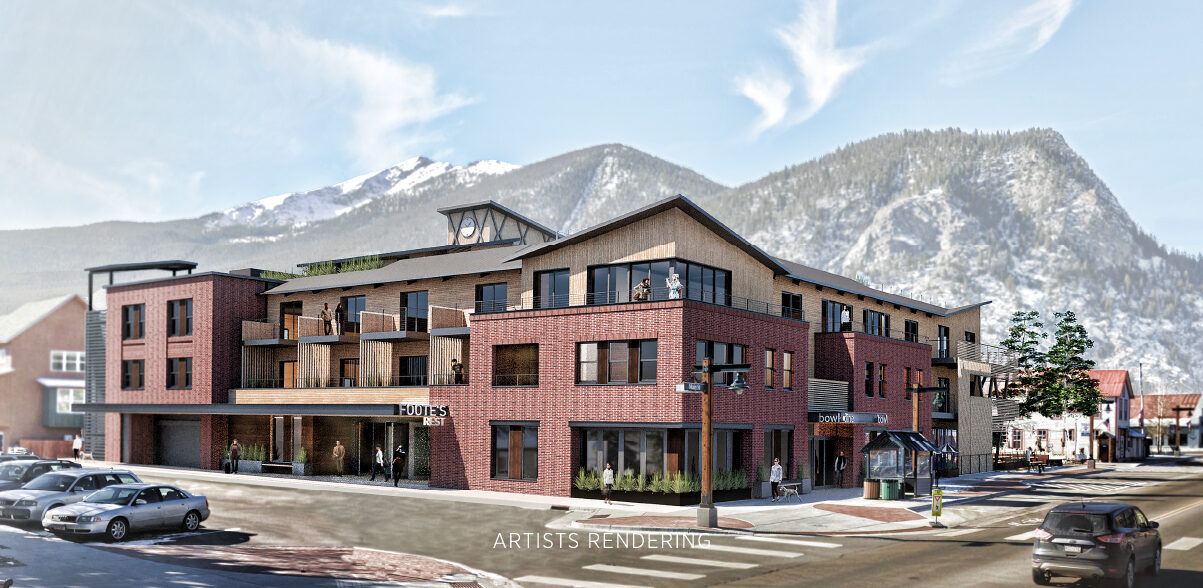
If you’ve walked down Main Street in Frisco recently and found yourself asking, “What are they building in downtown Frisco?” the answer centers on one of the town’s most recognizable historic properties: Foote’s Rest.

The Foote’s Rest block is undergoing a long-planned, Town of Frisco–approved redevelopment that will transform this central Main Street site into a boutique hotel and mixed-use destination, while preserving the historic identity that has made Foote’s Rest a local landmark for decades.
The History of Foote’s Rest

Foote’s Rest dates back to 1946, when it was established as a roadside stop and community hub during Frisco’s early growth years. Over time, the property served many roles, including a general store, post office, gas station, and tourist cabins for travelers passing through the High Country.

In more recent decades, Foote’s Rest became widely known as the home of the Foote’s Rest Sweet Shoppe, a candy and ice cream store that generations of visitors associate with summer afternoons on Main Street. The name carries real history, which is why redevelopment of the site has always been approached carefully.

What Is Being Built at Foote’s Rest?

The current Foote’s Rest project is a boutique hotel and mixed-use redevelopment located directly on Frisco’s Main Street. The project went through years of planning review and public hearings before receiving final approval from the Town of Frisco.

Unlike large resort developments elsewhere in Summit County, this project is designed to function as a town-center hotel that supports downtown businesses and walkability rather than overwhelming the historic core.

Town Council Review and Approval

Because of its location and historical significance, the Foote’s Rest redevelopment required approvals under Frisco’s Historic Overlay and Major Development standards. The project was reviewed by both the Planning Commission and Town Council through multiple public hearings.

Key points discussed during the approval process included building scale, preservation of historic character, employee housing considerations, and how the development would integrate into downtown Frisco without changing its small-town feel.

Why This Development Matters for Downtown Frisco

Downtown development in Frisco, Colorado has long-term implications beyond a single project. Main Street is a major driver of the town’s identity, tourism economy, and nearby real estate values.

The Foote’s Rest redevelopment reinforces Main Street as a walkable town center, adds lodging without expanding development outward, and preserves one of Frisco’s most recognizable historic names in the process.

What This Means for Frisco Real Estate

Changes along Main Street often influence buyer demand for nearby homes, condos, and second homes. Buyers who prioritize walkability and access to downtown amenities tend to pay close attention to how projects like this are handled.

For a broader look at how location impacts property values across town, visit my Frisco Neighborhood Guide.

Final Thoughts

Foote’s Rest has been part of Frisco for nearly 80 years. While the use of the property is evolving, its role as a gathering place on Main Street remains. The redevelopment reflects Frisco’s careful approach to growth, balancing preservation with the realities of a modern mountain town.
Questions About Frisco Real Estate?

If you’re curious how downtown development impacts nearby property values or want insight into buying or selling in Frisco, I’m happy to help.

Tucker Zimmerman
Associate Broker, Slifer Smith & Frampton
Phone: 303-907-9129
Email: TZimmerman@SliferSummit.com
Website: SoldInSummit.com

Posted in Happenings
Jan. 12, 2026

Summit County Real Estate Market Update – December 2025


By Tucker Zimmerman, Summit County Realtor with Slifer Smith & Frampton

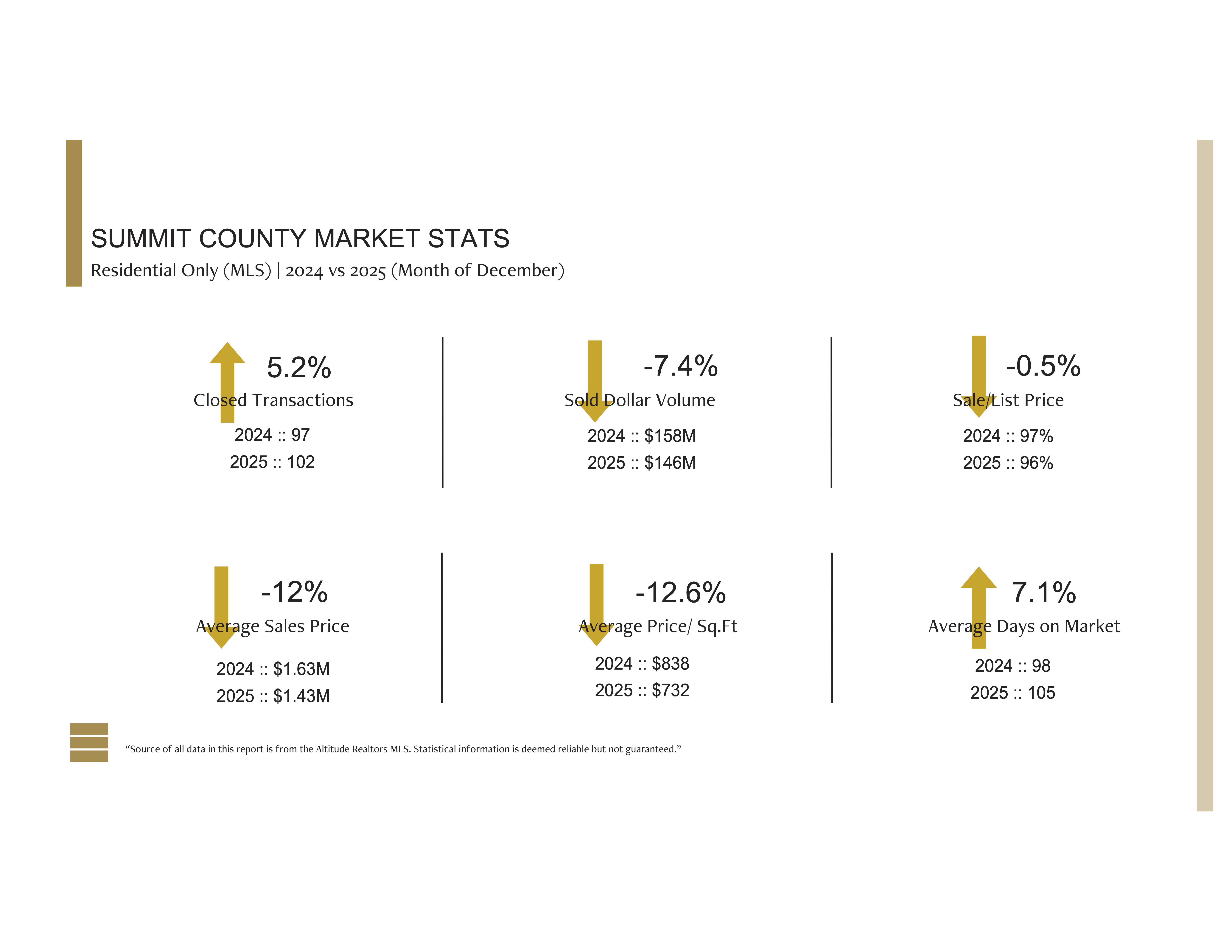
If you’re wondering how the Summit County real estate market wrapped up 2025, December offered some clear signals. Sales activity increased modestly compared to last year, pricing softened slightly, and inventory continued to build. Below is a straightforward look at the data and what it means as we head into early 2026.

December 2025 Summit County Market Snapshot

  • 102 residential sales
  • $146 million in total residential sales volume
  • 5.2% increase in closed transactions year over year
  • 7.4% decrease in total dollar volume compared to December 2024

Land sales remained unchanged year over year, with six total land transactions recorded in December.

Summit County real estate market statistics December 2025 compared to December 2024

Residential sales, pricing, and days-on-market metrics comparing December 2025 to December 2024.

Pricing Trends: Slight Softening, Not a Drop

On a rolling three-month basis, pricing metrics showed modest year-over-year declines:

  • 3-month average sales price: $1.41M (down 2.6% from last year)
  • Average price per square foot: $768 (down 5.5% year over year)
  • Average list-to-sold price ratio: 97%

This reflects a more balanced market where buyers have additional leverage, particularly on properties that are overpriced or slow to attract activity.

Homes Are Taking Longer to Sell

The three-month average days on market increased to 89 days, up 7% compared to December 2024. This shift is meaningful, especially when compared to the faster pace seen earlier in the market cycle.

Sellers should plan for longer timelines and focus on pricing accuracy from day one. Buyers may find more room to negotiate as a result.

Luxury Market Activity Slows

Luxury transactions over $2M declined in December:

  • 20 total sales over $2M
  • 26% decrease compared to December 2024
  • Highest sale price: $9,481,500

Luxury buyers remain active but are more selective, with greater sensitivity to value and condition.

Inventory Continues to Build Across Summit County

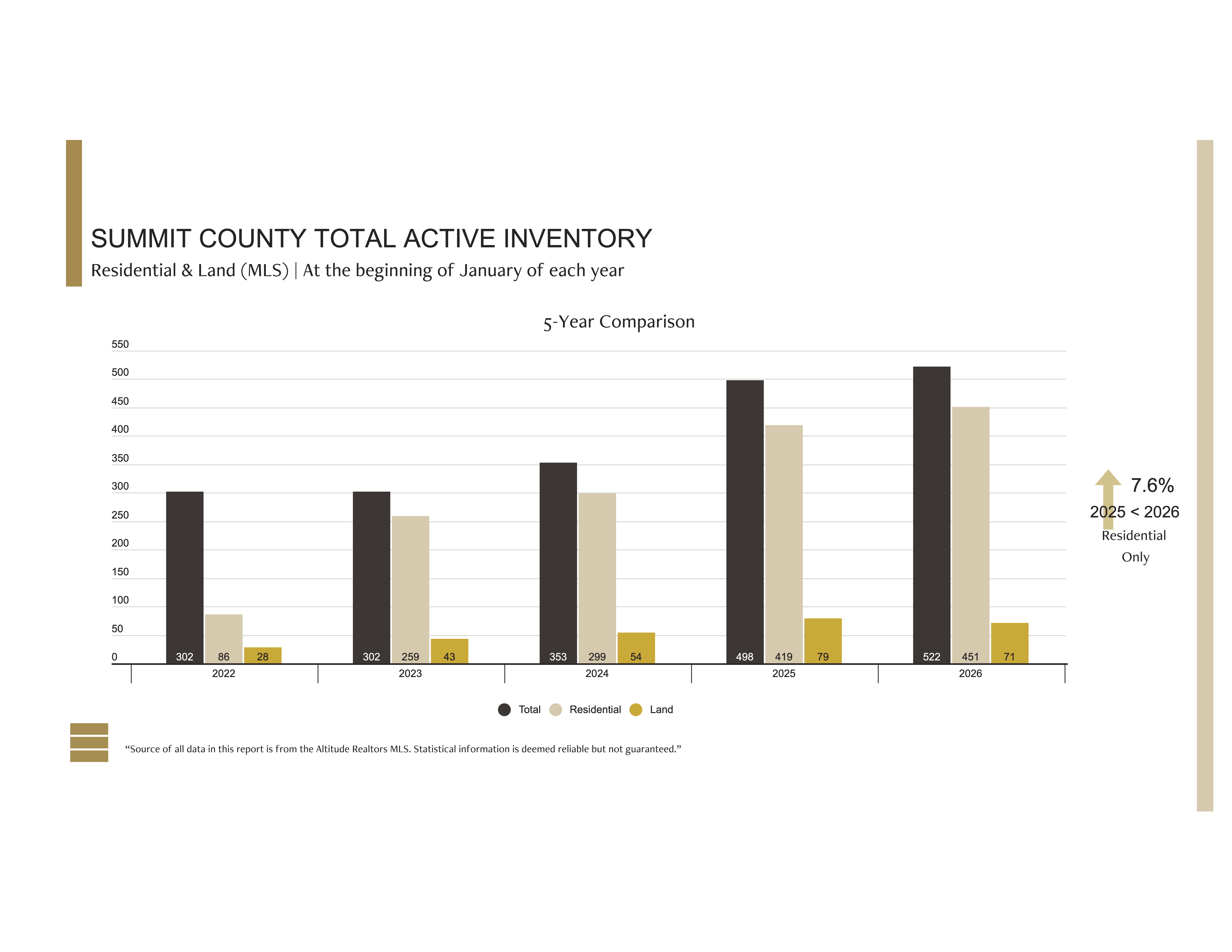
At the beginning of January 2026, Summit County recorded:

  • 522 active listings total
  • 451 residential listings
  • 71 land listings

This represents a 5% increase in total inventory compared to the same time last year.

Summit County active residential and land inventory at the start of 2026

Five-year comparison of active residential and land inventory in Summit County entering 2026.

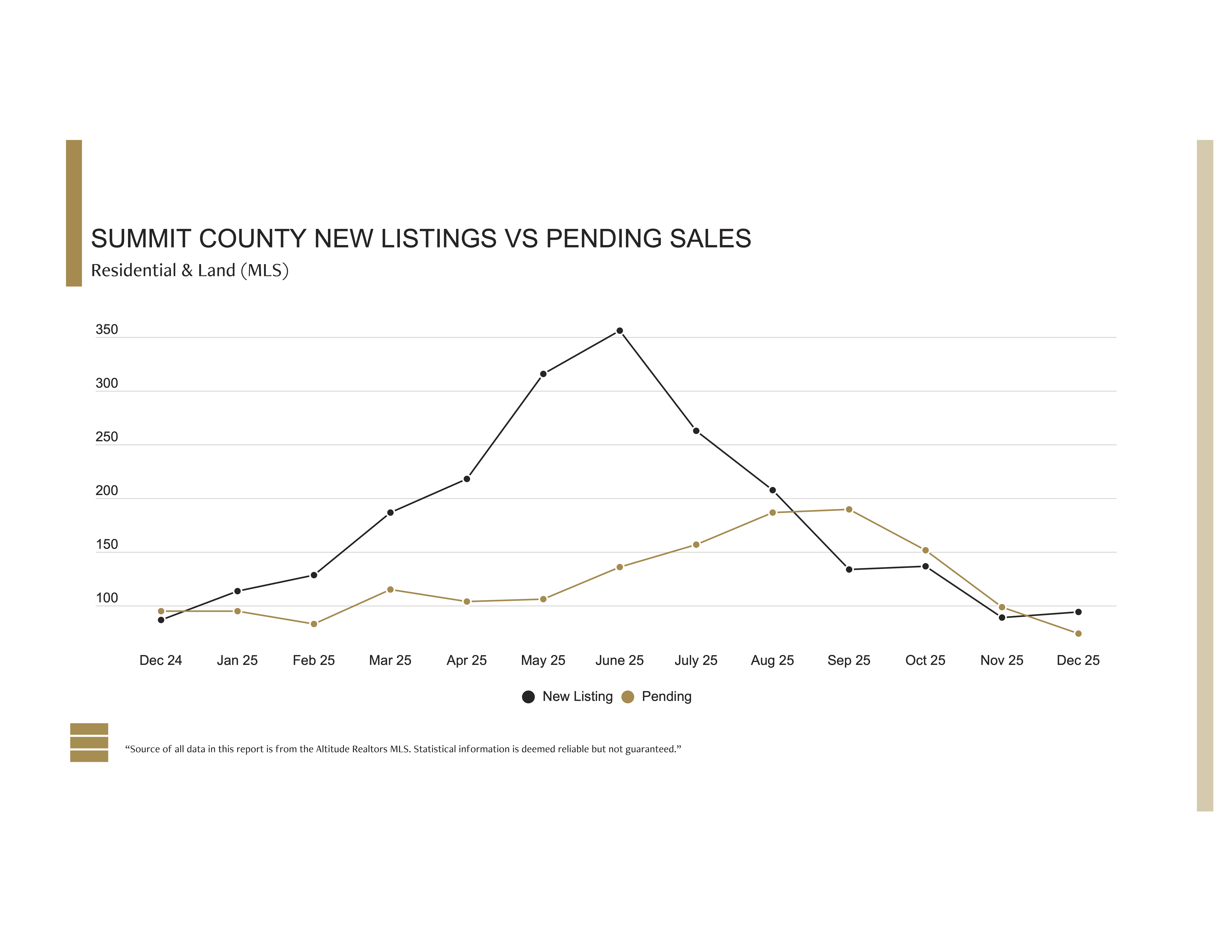
New Listings vs. Pending Sales

New listings and pending sales trends provide additional insight into market momentum heading into the new year.

Summit County new listings versus pending sales trend through December 2025

Monthly comparison of new listings and pending sales across Summit County through December 2025.

What This Means for Buyers and Sellers in 2026

Buyers are seeing more options, longer days on market, and improved negotiating conditions compared to recent years.

Sellers can still achieve strong results, but preparation matters. Pricing correctly, understanding your competition, and presenting the property well are more important than ever.

Every segment of the Summit County market behaves differently, from condos to single-family homes to vacant land. Interpreting the data in context is key.

Have Questions About the Summit County Market?

If you’d like to discuss how these trends apply to your property or buying plans, feel free to reach out.

Tucker Zimmerman
Associate Broker, Slifer Smith & Frampton
Phone: 303-907-9129
Email: TZimmerman@SliferSummit.com
Website: SoldInSummit.com

Data source: Altitude Realtors MLS. Data collected January 6, 2026. Information deemed reliable but not guaranteed.

Posted in Market Updates
Dec. 30, 2025

Second Home vs Investment Property in Summit County: How to Decide

Tucker Zimmerman is a Summit County Realtor based in Frisco and an Associate Broker with Slifer Smith & Frampton. He helps buyers make smart decisions around property use, financing, and long-term value, especially in a market where rental rules and ownership costs matter.

Many buyers start with the same question: “Should this be a second home or an investment property?” In Summit County, that decision impacts far more than taxes. It affects financing options, HOA rules, rental potential, management complexity, and how much you actually enjoy the property.

This guide explains the real-world differences, with Summit County specifics buyers need to understand before touring homes or writing an offer.

Quick Definitions

  • Second home: Purchased primarily for personal use. Rental income may be secondary or occasional.
  • Investment property: Purchased primarily to generate rental income and long-term returns.

Note: Lenders, HOAs, municipalities, and the IRS each apply their own definitions. This article is for educational purposes only.

The Summit County Reality: What Changes Based on Your Choice

HOA Rules and Rental Restrictions

HOA rules often matter more than price or views. Some buildings strongly favor owner occupancy, while others are designed for short-term rentals. These differences affect noise levels, wear and tear, parking, and overall ownership experience.

Before assuming rental income is possible, buyers should review the Summit County short-term rental regulations and confirm HOA-specific rules for each property.

Operating Costs Are Higher Than Many Buyers Expect

  • Snow removal and winter access
  • Insurance premiums and deductibles
  • Utilities during vacancy periods
  • Maintenance and emergency repairs
  • Property management fees if rented

Seasonality Affects Income and Personal Use

Peak winter and summer weeks drive most rental income. Using the property during those periods often reduces cash flow. Buyers should be realistic about how often they will personally use the home.

Location Can Push the Decision

Within Frisco, different areas lend themselves to different ownership goals. Compare overall market conditions here: Frisco Real Estate and explore neighborhood-specific tradeoffs using the Frisco neighborhood guide.

Pros and Cons of Buying a Second Home

Pros

  • Greater lifestyle flexibility
  • Less reliance on rental income
  • Lower operational complexity
  • Ability to prioritize comfort and layout

Cons

  • Higher out-of-pocket ownership costs
  • Missed rental income during peak periods
  • Less favorable tax treatment in many cases

Pros and Cons of Buying an Investment Property

Pros

  • Potential rental income to offset costs
  • More objective buying criteria
  • Possible tax advantages depending on use
  • Scalability with professional management

Cons

  • Rental and regulatory restrictions
  • Higher wear and tear
  • Management and compliance requirements
  • Income volatility due to seasonality

How a 1031 Exchange Applies to Investment Property vs Second Homes

A 1031 exchange allows owners of investment properties to defer capital gains taxes by reinvesting proceeds into another qualifying investment property. This strategy is commonly used by buyers selling Front Range rentals or out-of-state properties and reinvesting in Summit County.

Benefits of a 1031 Exchange

  • Tax deferral: Capital gains taxes are deferred, keeping more equity invested.
  • Increased buying power: Deferred taxes can significantly increase purchasing capacity.
  • Portfolio repositioning: Investors can move into properties with different risk, management, or appreciation profiles.
  • Future flexibility: With proper planning, some investment properties can later transition into personal use.

Why Most Second Homes Do Not Qualify

Properties purchased primarily for personal use generally do not qualify for a 1031 exchange. Both the relinquished property and replacement property must be held for investment or business purposes.

When a Summit County Property May Qualify

A property may qualify if it is rented at fair market value, personal use is limited, and the owner follows IRS safe harbor guidelines.

Short-Term Rental Rules Matter for 1031 Buyers

Because rental income supports investment classification, buyers must confirm that short-term rentals are legally allowed for the property. This includes town regulations, zoning, and HOA policies.

Before relying on projected income, review the Summit County short-term rental regulations and confirm how they apply to the specific address.

This section is for educational purposes only and is not tax or legal advice. Buyers should consult a qualified CPA or tax professional before pursuing a 1031 exchange.

A Simple Decision Framework

  • Is your primary goal lifestyle, income, or a balance of both?
  • How many weeks per year will you realistically use the property?
  • Can you comfortably carry the property during low rental periods?
  • Do HOA rules align with your intended use?

FAQ

Can a second home be rented in Summit County?

Sometimes. It depends on town regulations and HOA rules. Buyers should review local requirements before purchasing.

Can you use a 1031 exchange to buy a vacation rental?

Yes, if the property qualifies as an investment and personal use is limited according to IRS guidelines.

Does rental income make a property an investment?

Not automatically. Intent, usage patterns, and compliance with regulations all matter.


Talk Through Your Goals Before You Buy

Choosing between a second home and an investment property is easier when you understand how rules, costs, and lifestyle intersect in Summit County.

Tucker Zimmerman
Associate Broker, Slifer Smith & Frampton
Phone: 303-907-9129
Email: TZimmerman@SliferSummit.com
Website: SoldInSummit.com

Posted in Buying
Dec. 24, 2025

Try Before You Buy: A Smarter Way to Shop for a Mountain Home

Tucker Zimmerman is a Summit County Realtor based in Frisco and an Associate Broker with Slifer Smith & Frampton. He works with buyers throughout the Summit County real estate market who want to make confident, informed decisions when purchasing a mountain home or condo.

Many buyers ask whether they can stay in a home before closing. In most cases, the answer is no. Sellers have valid reasons for not allowing pre-closing occupancy, including insurance, liability, lender restrictions, and the risk of possession issues if a deal falls apart.

That does not mean you cannot “try before you buy.” In fact, one of the smartest ways to shop for a mountain property is by staying in short-term rentals while you search.

Why Short-Term Rentals Are a Powerful Research Tool

Summit County neighborhoods and building types can feel very different once you experience them overnight, during a snowstorm, or on a busy weekend. Photos and listing descriptions only tell part of the story.

Staying in short-term rentals allows you to test real-world conditions such as:

  • Morning sun versus afternoon shade
  • Noise from neighbors, highways, or snow removal
  • Parking convenience in winter weather
  • Ease of access to skiing, trails, or town amenities
  • How a building or neighborhood feels at different times of day

Compare Property Types Before Committing

While shopping, I often encourage buyers to stay in different types of properties across Summit County. A few nights in each can clarify preferences quickly.

  • A condo building with shared amenities versus a quieter complex
  • A townhome with stairs and shared walls versus a single-family home
  • An in-town location versus a more secluded mountain neighborhood

After each stay, tell me what you liked and disliked. These details help narrow your search far more effectively than general feedback during showings.

Use Longer Market Times to Your Advantage

With properties sitting on the market longer, buyers often have more flexibility. In some cases, you may even be able to stay in a short-term rental within the same neighborhood or condo building as a property you are seriously considering.

This approach also helps buyers better understand how short-term rental regulations in Summit County may impact future use, flexibility, and long-term plans.

A Better Way to Buy in the Mountains

Trying before buying reduces surprises after closing and leads to better long-term satisfaction with your purchase. It is especially helpful for second-home buyers who do not live in Summit County full time.

If you share what you are looking for, I am happy to help identify short-term rentals that match the property types and locations you are considering. It is a practical step that often saves buyers time, money, and second-guessing.

Talk With a Local Expert

If you are planning a Summit County purchase and want guidance on where to stay while you shop, reach out anytime.

Tucker Zimmerman
Associate Broker
Slifer Smith & Frampton
Phone: 303-907-9129
Email: TZimmerman@SliferSummit.com
Website: SoldInSummit.com

Posted in Buying
Dec. 19, 2025

Why Winter Is One of the Best Times to Buy in Summit County

Tucker Zimmerman is a Summit County Realtor based in Frisco and an Associate Broker with Slifer Smith & Frampton. He works with buyers across Summit County, helping both primary and second home buyers understand how mountain properties perform in real conditions.

Many buyers assume summer is the best time to purchase real estate in Summit County. In reality, winter can offer distinct advantages for buyers who want clearer information, less competition, and a more accurate understanding of mountain home ownership.

From snow management to access and energy efficiency, winter reveals details that are critical when buying a home in a high alpine environment.

Winter Reveals How a Summit County Home Actually Performs

Winter conditions expose aspects of a property that are hidden during warmer months. Snow accumulation highlights roof design and snow load management. Ice buildup shows drainage patterns and sun exposure. Driveway pitch, plowing access, and parking functionality become immediately apparent.

For buyers evaluating Summit County homes for year round living or second home use, these details directly impact safety, maintenance costs, and day to day usability.

Seeing a home in winter reduces assumptions and helps buyers make decisions based on real performance rather than ideal conditions.

Less Buyer Competition in the Winter Market

The Summit County real estate market is highly seasonal. Many buyers wait until spring or summer to begin their search, especially second home buyers traveling from outside the area.

Winter typically brings fewer showings and less bidding pressure. Sellers who list during the winter months are often more realistic on pricing and timing, which can create opportunities that are harder to find during peak season.

For prepared buyers, winter can be a more focused and less emotional buying environment.

A Better View of Winter Living in the Mountains

Buying a mountain home in Summit County comes with winter specific responsibilities. Heating systems, insulation quality, window efficiency, garage design, mudroom layout, and entry access all matter more when temperatures drop and snow is consistent.

Winter showings allow buyers to evaluate how a home supports daily winter living rather than relying on summer photos or staging.

This is especially important for buyers relocating from the Front Range or out of state who may not be familiar with mountain climate realities.

Financing and Transactions Continue Year Round

Despite common misconceptions, real estate transactions continue through winter in Summit County. Lenders, inspectors, appraisers, and title companies operate year round.

The key difference is experience. Working with local professionals who understand winter access, inspection logistics, and realistic timelines helps transactions move smoothly even during snow season.

With proper planning, winter purchases can close just as reliably as summer transactions.

How Winter Buying Fits into the Larger Summit County Market

Winter buyers are often more deliberate. Many are focused on long term ownership, rental strategy, or lifestyle fit rather than timing the market.

Understanding seasonal trends is part of evaluating Summit County real estate as a whole. Buyers who take the time to study winter conditions often feel more confident in their purchase decisions.

For a broader overview of the local market, buyers can explore the Frisco Neighborhood Guide, which provides context on property types, access, and lifestyle considerations within Summit County.

Bottom Line

Winter is not the busiest season for Summit County real estate, but it can be one of the most informative. Buyers gain clearer insight into how a property handles snow, cold, and access while often facing less competition.

For buyers who value practical information and long term livability, winter can be one of the best times to buy in Summit County.


Contact

Tucker Zimmerman
Associate Broker, Slifer Smith & Frampton
Phone: 303-907-9129
Email: TZimmerman@SliferSummit.com
Website: SoldInSummit.com

Posted in Buying
Nov. 26, 2025

2026 Summit County Real Estate Forecast | Tucker Zimmerman Realtor

Tucker Zimmerman is a Summit County Realtor based in Frisco and an Associate Broker with Slifer Smith & Frampton. I help buyers and sellers across Breckenridge, Frisco, Silverthorne, Dillon, Keystone, Copper Mountain, and Wildernest understand this mountain market without the hype.

Disclosure: Everything below is just one Realtor’s educated guess based on local data, daily conversations, and way too much coffee. I do not have a crystal ball. If I did, I’d be writing this from my yacht in the Mediterranean instead of my office in Frisco.


How We Actually Got Here

If you’ve spent any time on YouTube lately, you’ve probably been told that the Colorado mountains are in “freefall,” “collapse,” or “the worst crash ever.”

Take a deep breath. Maybe drink some water. That stuff gets views, but it’s not what’s happening here in Summit County.

Here’s the real version.

When mortgage rates jumped in 2023 and 2024, nobody wanted to give up their 2.8 percent loan. So hardly anyone listed. Prices held because inventory was the lowest we'd seen in over a decade. Welcome to the golden handcuff era.

Then 2025 showed up, and real life finally broke the handcuffs. New jobs. Growing families. Downsizing. Divorce. Marriage. Inheritance. Grandkids appearing out of nowhere. You name it.

Suddenly, homes actually came on the market again. Not a little. A lot.

Inventory surged in spring and summer 2025, and demand stayed roughly the same as 2023 and 2024. That’s what caused price softening. No panic. No meltdown. Just more listings competing for the same number of buyers.


The Long View

This ShowingTime chart paints the picture nicely:

Strong appreciation from 2017 to 2023. A sideways year in 2024. Then the 2025 adjustment once inventory returned to normal human levels.


Where Prices Softened

The biggest softening happened in areas with a ton of similar condos. When ten nearly identical units hit the market at once, pricing gets real, real fast. These areas saw the biggest swings:

  • Wildernest
  • Dillon Valley
  • Older condos in Keystone
  • Several Silverthorne condo developments with similar layouts

Many of these units saw 10 to 15 percent off peak pricing. That is normal when supply rises in a homogenous market.


Where Prices Stayed Strong

Meanwhile, other parts of the county barely blinked. These areas stayed competitive throughout:

  • Breckenridge in-town homes and ski access properties
  • Frisco walkable neighborhoods near Main Street or Lake Dillon
  • View and river-adjacent homes in Silverthorne
  • River Run Village in Keystone
  • Ski in/ski out at Copper
  • Most luxury homes over 2 million

These buyers tend to be lifestyle-driven, less rate-sensitive, and focused on what Summit County actually offers.


What National Forecasts Say

National projections for 2026 are surprisingly aligned with what we’re seeing locally:

  • Fannie Mae: Predicting lower rates and steady appreciation around 3 to 4 percent.
  • Freddie Mac: Tight inventory should keep national prices stable.
  • Zillow: Expecting modest gains and solid second-home activity.
  • MBA: More buyers re-entering the market as rates normalize.
  • NAR: Stronger transaction volume ahead.
  • Goldman Sachs: Higher-income discretionary purchases are expected to rebound, which directly benefits resort markets.

Summit County almost always outperforms national averages because we are a true lifestyle market with limited buildable land. So our expected 4 to 6 percent appreciation lines up nicely with these forecasts.


So What Happens in 2026?

1. Quiet winter. Stronger summer.

Winter and early spring will feel normal. Stable. Balanced. Nothing wild. Once we hit May, activity should pick up quickly.

2. Appreciation returns, but slowly

Think 4 to 6 percent countywide, with some neighborhoods squeezing out a little more.

3. Homogenous condo areas recover slower

Wildernest, Dillon Valley, and older condo buildings will improve, but more gradually. Buyers have choices here.

4. Silverthorne’s new construction wave will matter

Silverthorne has more new construction than any other town. These homes will keep pricing balanced, especially for older homes without updates.

5. Breckenridge, Frisco, and premium neighborhoods should shine

Walkable neighborhoods, lake proximity, strong amenities, and ski access tend to recover the fastest.


Thinking About Making a Move?

Every market in Summit County behaves differently. If you want a grounded, local opinion on your property, your neighborhood, or your price range, I’m happy to talk through it without pressure.

Work With a Local Summit County Expert

Tucker Zimmerman
Full-time Realtor and Associate Broker, Slifer Smith & Frampton
Based in Frisco
Phone: 303-907-9129
Email: TZimmerman@SliferSummit.com
Website: https://www.soldinsummit.com/

If you want a curated shortlist, a custom valuation, HOA analysis, or help understanding STR rules, I’m here to help.

Posted in Market Updates
Nov. 24, 2025

Buying a Home in Breckenridge, Colorado | 2026 Guide by Tucker Zimmerman

Buying a Home in Breckenridge, Colorado: 2026 Guide

Updated July 22nd, 2026 to reflect current market conditions.

By Tucker Zimmerman, Associate Broker with Slifer Smith & Frampton Real Estate

Breckenridge is one of the most recognizable ski towns in the country and one of the most expensive real estate markets in Summit County. If you are thinking about buying a home in Breckenridge, you are probably juggling a lot of questions at once. Where should you buy. How much do you need to budget. What are the short term rental rules. When is the best time to buy.

This guide is written to give you a clear, practical overview of how Breckenridge actually works for buyers in 2026. I focus on how the market behaves, what makes each part of town different, and what you should look out for so you can move with confidence when the right place appears.

I work as a full time Summit County Realtor based in Frisco. Breckenridge is a big part of my day to day work with buyers and sellers, and I treat each purchase like a project with clear steps, timelines, and expectations.

Why buyers choose Breckenridge

Breckenridge is not just a ski resort village. It is a real town with history, year round events, and a strong community. Buyers tend to choose Breckenridge for a mix of reasons:

  • World class skiing with a large variety of terrain, from family friendly greens to hike to bowls.
  • Historic Main Street with restaurants, shops, coffee, and nightlife instead of a purely corporate base village feel.
  • Four season use for biking, hiking, fishing, festivals, and events when the lifts are not spinning.
  • Established rental demand for short term and seasonal rentals in the right locations and buildings.
  • Strong long term appeal which supports both lifestyle and resale value over time.

Breckenridge is a good fit if you want to be close to the action, use the property often yourself, and still have the option to rent in a responsible way where rules allow it.

Breckenridge market overview for 2026

As of July 2026, the Breckenridge market is more balanced than it was during the extremely competitive years earlier this decade. The normal summer wave of new listings has given buyers more choices, and many sellers are willing to negotiate when a property has been on the market or the original price was too ambitious.

That does not mean every buyer has the upper hand. Fresh, well-priced homes in desirable locations can still attract immediate attention, and occasionally multiple offers. Properties with good ski access, walkability, views, strong condition, or a favorable short term rental situation tend to stand apart. The listings that sit are usually giving buyers a reason, whether that is price, condition, location, carrying cost, or some combination of the four.

Breckenridge is also too varied for one median price or market-wide statistic to tell the whole story. A slopeside condo, a home near Main Street, and a larger house several miles south of town can behave like three different markets. Before you get too deep into specific complexes or neighborhoods, it helps to look at the current competition and recent comparable sales for the exact type of property you want.

You can see the latest numbers and trends here:

In general, Breckenridge remains one of the more expensive towns in Summit County, especially for ski in and ski out properties and homes close to Main Street. Buyers have more room to be selective in the current market, but the best homes can still attract a lot of attention when they first hit the market.

Key areas and property types in Breckenridge

Breckenridge is more than just one neighborhood. How you plan to use your home will have a big impact on where you should focus. Below is a simplified overview of how buyers often think about Breckenridge.

1. In town and near Main Street

These homes and condos are popular with buyers who want walkability. You can walk to restaurants, shops, and events without getting in the car. Many of these properties also have ski shuttle access or are walkable to the Gondola.

In town properties usually command a premium price per square foot because they work well both for owners and renters. They can also come with more noise and activity, so it is important to be honest about whether you prefer energy or quiet.

2. Ski in and ski out areas

Ski in and ski out condos and homes are ideal if your priority is maximum ski convenience. These properties are usually on or very near the slopes. They perform well in short term rental environments when licensed, but they also tend to be the most expensive segment of the market.

Ski access is not always as simple as a straight line on a map. When we evaluate these homes, I like to look at how easy it really is to get from your door to the lift and back, and whether that access still feels comfortable for kids and mixed ability groups.

3. Single family homes near town

There are pockets of single family homes within a short drive of Main Street. These can offer more privacy, a garage for gear, and more of a primary home feel. Some neighborhoods lean more toward locals and long term residents, while others are more second home and rental heavy.

4. Outer neighborhoods and view properties

Outside of the town core you find neighborhoods with bigger lots, more trees, and broader views. These areas can work well if you value elbow room more than walkability. Driving into town is part of the deal, but you often get more house for the money and a quieter setting.

5. Condos versus townhomes versus single family

Breckenridge offers:

  • Condos that are often close to lifts or Main Street, usually with shared amenities like hot tubs and pools.
  • Townhomes and duplexes that feel more like a house but still share walls and HOA responsibilities.
  • Single family homes with private garages, yards, and more storage.

Each category comes with different HOA structures, maintenance responsibilities, and rental dynamics. Part of my job is to help you match your lifestyle and budget to the right type rather than chase whatever hits the portal first.

Short term rental rules in Breckenridge

Short term rental regulations are a major factor in Breckenridge. Rules are different from one part of town to another, and they change over time. If rental income is part of your plan, you need to understand the current rules before you write an offer.

Key points for buyers who care about rentals:

  • Rules vary by zone, building, and sometimes by type of property.
  • License availability, caps, and waiting lists can affect your timeline.
  • Some areas are more supportive of nightly rentals than others.
  • Future changes are always possible, so it is smart to plan with some flexibility.

I keep a close eye on short term rental changes across Summit County. For a broader overview, you can start here:

Summit County short term rental regulations

When we work together, I will help you confirm whether a specific property fits your rental goals, what the current rules are, and how those rules may affect your numbers.

What to budget for when you buy in Breckenridge

Price is the obvious starting point, but owning in Breckenridge includes a few extra layers. I like to help buyers get a clear picture of total carrying cost before they fall in love with a property.

Common ownership costs include:

  • Principal and interest on your loan.
  • Property taxes and any local lodging or business licenses if you rent.
  • Homeowners association dues, which can be significant in amenity rich condo complexes.
  • Utilities such as electric, gas, internet, and sometimes shared boiler or snowmelt costs.
  • Insurance, including special considerations for mountain weather.
  • Maintenance and capital projects that are planned at the HOA level.
  • Management fees if you plan to hire a short term or long term rental manager.

During your search I like to build a simple, realistic cost snapshot for each serious contender so you can compare properties based on what it will actually feel like to own them, not just the list price.

Best time of year to buy in Breckenridge

There is no single perfect month to buy in Breckenridge, but the broader Summit County data shows that different seasons favor different types of buyers.

  • Summer often has the most inventory and the widest selection. New listings can attract immediate attention, but buyers can also find negotiating opportunities among properties that have been sitting since early summer.
  • Fall can bring softer pricing and more negotiation room, especially on listings that have been on the market since summer.
  • Winter tends to have lower inventory but can offer some of the lowest price per square foot in certain years, with motivated sellers and fewer casual buyers.
  • Spring is a transition season where new listings start to appear ahead of summer and buyers can get early access to upcoming inventory.

For a deeper breakdown of how timing works across Summit County and how different seasons affect pricing, inventory, and negotiation power, you can read my full guide here:

Best time of year to buy real estate in Summit County

The main idea is that the right home for you can appear in any season. My job is to help you be ready when it does.

How the buying process works in Breckenridge

The steps to buy in Breckenridge are similar to other markets, but mountain specific details, HOAs, and local rules add a few extra layers. Here is a high level view of the process.

  1. Clarify your goals How often will you use the property. Will you rent it. Do you care more about ski access, Main Street, or views. I like to start with a short conversation to map out your priorities.
  2. Get pre approved If you are financing, a local or mountain experienced lender is important. This helps you act quickly and keeps your offer competitive when the right home appears.
  3. Build a focused search We narrow by area, property type, HOA, and rules so your inbox is not flooded with noise. I also manually watch for off market possibilities and quiet opportunities.
  4. Touring and short list When you are in town, we tour homes that truly fit your criteria. If you are out of state, I often start with video tours and honest feedback before you travel.
  5. Offer and negotiations Once you are ready to offer, I help you decide on price, terms, and timing, using current data and the story of that specific listing to shape strategy.
  6. Due diligence and inspections We work with inspectors who understand mountain properties. I also help you review HOA documents, budgets, reserves, and planned projects so there are fewer surprises.
  7. Closing and after closing I coordinate with your lender, title, and other parties so closing is as smooth as possible. After closing I connect you with local vendors, cleaners, rental managers, and contractors as needed.

If you want a more general overview of buying in Summit County, this page is a good resource: Buying in Summit County.

How I help Breckenridge buyers

Buying in Breckenridge, especially as a second home or investment, is often different from buying your primary home. Timelines, rental rules, HOA structures, and what you do when you are not in town all matter.

I focus on:

  • Matching your lifestyle to the right part of Breckenridge rather than just chasing listings.
  • Explaining tradeoffs clearly so you know what you are gaining and giving up with each choice.
  • Keeping pressure at your pace. I can keep things relaxed and low key or move very quickly if you want to secure a place before a certain season.
  • Going beyond the portal with targeted outreach, watching aging listings, and using my network at Slifer Smith & Frampton to hear about upcoming opportunities.
  • Managing details behind the scenes so the process feels organized instead of chaotic.

If you are starting to think about a Breckenridge property, a short conversation can save you a lot of guessing. We can talk about timing, budget, neighborhoods, and what is realistic based on current conditions.

Frequently asked questions about buying in Breckenridge

Is Breckenridge a good place to buy a second home

Yes, Breckenridge is a strong option for a second home if you value skiing, a real Main Street, and four season use. It also has established rental demand in the right areas. The tradeoff is a higher price point compared to some other Summit County towns and more complex short term rental rules that you need to understand ahead of time.

Is it better to buy a condo or a house in Breckenridge

It depends on how you plan to use it. Condos often offer the best ski access and amenities and can be simpler to maintain, but they come with HOA dues and shared decisions. Single family homes provide more space, storage, and privacy but can be farther from lifts and require more hands on ownership. Many buyers land on a townhome or duplex as a middle ground.

Can I use short term rentals to cover my costs

Short term rentals can offset some costs in the right property, but it is rare for rentals to cover 100 percent of expenses on a fully leveraged purchase. Rules are strict and vary by area, and you should underwrite conservatively. I help buyers choose properties that fit realistic rental expectations and confirm current regulations before they commit.

How competitive is it to buy in Breckenridge

The Breckenridge market is more balanced in July 2026 than it was during the most competitive years earlier this decade. Buyers generally have more choices and more time to evaluate a property, and there can be meaningful negotiating room on listings that have been sitting. The best new listings can still move quickly, especially when they are well located, show well, and are priced correctly. The strategy should depend on the property in front of you, not a blanket assumption that every listing will receive multiple offers.

How far in advance should I start planning

It is smart to start planning a few months before you want to be serious. That gives us time to talk through your goals, get pre approved, study neighborhoods, and set up targeted search alerts. If you want to own a place by a specific season, like next ski season or next summer, starting early improves your odds of finding the right fit instead of settling for whatever is left.

Ready to talk about buying in Breckenridge

If you are starting to think about a Breckenridge home and want clear, honest feedback on timing, neighborhoods, and what is realistic for your budget, I would be happy to talk.

Contact Tucker Zimmerman
Associate Broker, Slifer Smith & Frampton Real Estate
Phone: (303) 907 9129
Email: TZimmerman@SliferSummit.com
Website: SoldInSummit.com


Posted in Buying
Nov. 21, 2025

Best Time of Year to Buy Real Estate in Summit County | 2026 Market Guide

The Best Time of Year to Buy Real Estate in Summit County, Colorado

2026 Guide by Tucker Zimmerman, Slifer Smith & Frampton Real Estate

One of the most common questions I hear is simple on the surface and complicated in reality: When is the best time to buy in Summit County?

The honest answer is that the right property for you can show up in any month. Summit County is primarily a second home market, and real life tends to drive timing just as much as the calendar. That said, our local data does show clear seasonal patterns in price per square foot, days on market, and negotiation power.

This guide breaks down how each season behaves so you can line up your plans with the market and move confidently when the right home appears.

Why your personal timing matters more than the calendar

Most of my buyers are not trying to call the exact bottom of the market. They are trying to align a home with a life goal. For example:

  • Wanting a mountain retreat for weekends and longer stays.
  • Wanting to make memories with family in a real ski town instead of hotel rooms.
  • Working remotely and choosing a lifestyle based around trails, snow, and fresh air.
  • Planning for rental income to help offset ownership costs.
  • Responding to a growing family or other major life change.

In a market where land is finite and every neighborhood has its own character, your readiness and the quality of the specific home usually matter more than hitting a perfect month on the calendar.

My role is to help you get organized, understand the tradeoffs in each season, and keep an eye out for properties that fit the way you actually want to use them.

How Summit County seasons shape the buying experience

Summit County real estate follows a fairly consistent yearly rhythm. Below is a practical breakdown of how summer, fall, winter, and spring typically behave, and how you can use that information rather than get overwhelmed by it.

Summer: The most options and the most competition

From June through early September, inventory is usually at its highest. If you want to see the widest range of properties across Frisco, Breckenridge, Silverthorne, Dillon, Keystone, and Copper Mountain, summer is often the easiest time to shop.

Historical data in Summit County typically shows that in summer:

  • Inventory often peaks, frequently in the 600 to 900 active listing range.
  • Days on market tighten, often averaging 20 to 30 days, which indicates strong activity.
  • Sale to list price ratios stay firm, typically around 0.985 to 0.995.
  • Price per square foot holds steady because demand is high and buyers are in town.

Why buyers appreciate summer:

  • Clear roads, good weather, and longer days make it easier to tour multiple homes in one trip.
  • You can walk neighborhoods, check trail and Rec Path access, and get a feel for each town.
  • You see the most variety in price points, property types, and locations.

What to be aware of:

  • More buyers in town means more competition.
  • Well located properties can see multiple interested parties and firm pricing.
  • Popular homes may go under contract quickly, so preparation matters.

During summer I focus on helping clients narrow quickly. With more options on the table, it becomes important to define non negotiables and move decisively when the right home appears.

Fall: Strong opportunities and leverage in November and early winter

From September through late fall, activity gradually slows after the summer rush. This can be one of the best windows for buyers who want more room to negotiate and are comfortable looking when others are distracted by school schedules and holidays.

Typical fall patterns include:

  • Price per square foot often softens slightly after peak summer, even though fall is rarely the lowest PPSF season of the year.
  • Days on market increase, frequently stretching into the 30 to 50 day range or more on some properties.
  • Sale to list ratios ease toward the 0.97 range as sellers react to fewer showings.
  • Inventory remains elevated because many summer listings have aged and are still on the market.

Why fall benefits buyers:

  • There is less competition from other buyers as travel and school routines ramp back up.
  • Sellers who have been listed since summer are very aware of their days on market count.
  • Many owners would rather sell and be done before deep winter than carry a stale listing.

Why November can be a great time for stronger offers

By November and early December, ski season has technically started but conditions are often still ramping up. Many buyers wait for better snow before they get serious. That reluctance creates a window for you to write more aggressive offers when there is less noise in the market.

November often combines softened demand, motivated sellers, and decent remaining supply. This is one of the best times of year to look for value, especially on properties that have been sitting since summer. If you go under contract in late fall, you can often close in time to enjoy your new home during the peak of ski season, then tackle any updates during mud season when it is easier to schedule work.

Fall is a season where a prepared buyer can often get a stronger overall package. I watch closely for price reductions, stale listings with potential, and homes that line up with your goals but may not be getting much attention.

If you like data, you can see how current numbers compare here: Summit County market report.

Winter: Lower inventory, low PPSF, and selective opportunities

December through March usually brings the lowest number of active listings. Many second home owners prefer to use their properties during ski season instead of listing them for sale, so supply naturally tightens.

Even with fewer options, the numbers often show that in winter:

  • Inventory runs in a lower band, often around 250 to 400 active listings, depending on the year.
  • Days on market rise into the 40 to 60 day range on some properties, which increases buyer leverage.
  • Price per square foot tends to run lower than peak spring levels. January, February, and March have been the lowest PPSF months in several recent years.
  • Sale to list ratios allow more negotiation, even if they remain fairly stable overall.

Why winter can work well for buyers:

  • There is less competition from casual buyers who are not comfortable shopping in winter conditions.
  • Sellers who list in winter are often serious about selling rather than simply testing the market.
  • You can evaluate ski access, shuttle routes, plowing patterns, and winter conditions in real time.
  • Winter and early spring can be some of the best times to buy ski area properties from a value perspective.

Even in quieter months, buyers are still active. December, January, and February routinely see dozens of closed sales, which shows that opportunities exist year round for prepared buyers.

Winter can be a good fit if you value leverage over selection. During this season I focus on helping clients identify the handful of properties that are worth pursuing and understand why those particular sellers chose to be on the market now.

If you are thinking about a ski focused property, this guide is a helpful deep dive: Buying a ski condo in Frisco.

Spring: Getting a head start on summer inventory

April and May act as a transition. New listings start to hit the market as sellers prepare for the busy season, and buyers who are paying attention can get a head start before peak competition arrives.

In a typical year, the data shows that in spring:

  • New listings begin to build as owners position their homes for summer buyers.
  • Inventory trends upward from winter lows into early summer.
  • Competition is moderate, with more buyers returning but not at peak levels yet.
  • Days on market begin to shorten as buyer activity increases.
  • Price per square foot often runs high in April and May as the market resets heading into summer.

Spring works well for buyers who want to be positioned and ready before the full summer crowd arrives. This is often when I help clients finalize financing, fine tune their search criteria, and set up alerts so we can move quickly as stronger listings appear.

What the data shows in Summit County

Looking at Summit County over multiple years, a few clear patterns show up in the statistics. These trends can help you understand how pricing, competition, and leverage shift throughout the year, even though the right home for you can appear in any season.

  • Summer has the most inventory, often 600 to 900 active listings, and the widest range of options. Days on market typically tighten to 20 to 30 days and sale to list ratios stay firm around 0.985 to 0.995.
  • Fall and late fall bring some of the best conditions for negotiation. Sale to list ratios often soften into the 0.97 range, competition drops sharply in October and November, and many summer listings have higher days on market.
  • November consistently stands out for buyers. It often combines softer demand, motivated sellers, and decent remaining supply, which can create strong conditions for value oriented offers.
  • Winter produces the lowest price per square foot in many years. January, February, and March have been the lowest PPSF months in multiple recent years, with days on market moving into the 40 to 60 day range on some properties.
  • Spring often shows PPSF peaks, especially in April and May, but it is also when inventory begins building again and buyers can get early access to upcoming summer options.
  • Even in the quietest seasons, buyers are active. Winter months routinely see strong numbers of closed sales, which means opportunities exist year round if you are prepared.

The bottom line is simple. Summer offers the most selection, late fall and early winter bring the most leverage, and winter often delivers the lowest price per square foot. If you are ready when the right home appears, you can succeed in any season.

How to be a successful Summit County buyer in any season

Here is how I help buyers put all of this into practice without making it feel overwhelming:

  • Start with strategy – We begin with a short conversation about how you plan to use the property, what towns interest you, and what your true comfort zone is on budget.
  • Get pre approved early – This lets you act quickly when the right home appears instead of scrambling while other buyers move first.
  • Smart search setup – I build targeted listing alerts and manually watch for on market and sometimes off market opportunities that fit your criteria.
  • Neighborhood and HOA context – We talk through how different areas behave, what HOAs include, and how short term rental rules might affect your plan.
  • Clear, data driven guidance – I share current market data in plain language so you can decide when to be aggressive and when it makes sense to be patient.

If you want to start exploring specific neighborhoods and sub areas, this is a helpful place to begin: Living in Summit County, Colorado: The Local’s Guide.

The best time to buy is when the right home appears

Seasonal trends are useful, but your goals and timing matter most. Summit County offers a mix of lakefront condos, townhomes and duplexes, and single family homes in communities that all feel a little different. There are good opportunities in every season if you know where to look and what to avoid.

If you would like help matching your timeline and lifestyle to the right towns, neighborhoods, and property types, I would be happy to walk you through it.

Contact Tucker Zimmerman
Associate Broker, Slifer Smith & Frampton Real Estate
Phone: (303) 907 9129
Email: TZimmerman@SliferSummit.com
Website: SoldInSummit.com

Helpful resources:
Buying in Summit County | Summit County market report | Short term rental rules


Posted in Buying
Dec. 14, 2024

Blueprint Summit County: What It Means for Residents, Second Homeowners, and Property Values


Mountain Community

Summit County, Colorado, known for its breathtaking mountain views, world-class ski resorts, and vibrant community, is at a pivotal moment in its planning history. The recently released Blueprint Summit County Draft Plan outlines an ambitious vision for the county’s future, tackling challenges like sustainable growth, housing affordability, environmental stewardship, and economic resilience. Here’s what you need to know about the plan—and how it might impact housing, property values, and life in Summit County.

What Is the Blueprint Summit County Draft Plan?

The Blueprint Summit County Draft Plan is the county’s comprehensive policy document designed to guide land use, development, and resource management for the next decade. The plan prioritizes equity, sustainability, and resiliency while addressing major challenges such as:

  • The rising cost of housing.

  • Environmental pressures from climate change.

  • Strains on infrastructure due to growing tourism and population changes.

The plan was developed with extensive community input, engaging over 4,000 residents through surveys, focus groups, and public forums. For the full details, you can access the draft plan here: Blueprint Summit County Draft Plan.

Key Focus Areas of the Plan

  1. Community Connection: Strengthening social ties through accessible mental health services, childcare, and affordable healthcare.

  2. Environmental Stewardship: Balancing growth with the conservation of Summit County’s natural beauty and resources.

  3. Housing and Affordability: Addressing the challenges of short-term rentals, workforce housing, and affordability gaps.

  4. Transportation and Connectivity: Improving transit options and reducing reliance on single-occupancy vehicles.

  5. Balanced Growth: Strategically directing development to maintain the unique character of each community.

Housing Impacts: Locals vs. Second Homeowners

Housing affordability is one of the most urgent issues facing Summit County, and the plan takes a bold approach to address it. Here’s how the Blueprint Summit County Draft Plan could shape housing for locals and second homeowners:

For Locals:

  • Expanded Workforce Housing: New developments will need to include affordable housing units or contribute to a housing fund. This policy is designed to increase housing options for residents and essential workers.

  • Deed Restrictions: The county plans to expand deed restrictions, ensuring homes remain affordable for local buyers and are not converted into investment properties.

  • Short-Term Rental Regulations: By limiting the proliferation of short-term rentals in high-demand residential areas, the plan aims to free up housing for long-term residents.

For Second Homeowners:

  • Increased Regulation on STRs: New fees and stricter rules could make short-term renting less lucrative in certain areas, potentially encouraging second homeowners to consider long-term rental options instead.

  • Zoning Changes: Second homeowners may face additional restrictions in areas rezoned to prioritize affordable housing or workforce accommodations.

How Could This Impact Property Values?

The Blueprint Summit County Draft Plan’s policies could have varying effects on property values:

  1. Residential Areas: Limiting short-term rentals may reduce competition among buyers seeking investment properties, potentially stabilizing prices in certain neighborhoods. However, this could also make long-term housing more accessible for locals, enhancing the community’s vibrancy and appeal.

  2. Luxury Market: High-end homes, particularly those in vacation areas like Breckenridge or Copper Mountain, may see less impact from affordability policies but could face stricter environmental regulations that influence future development.

  3. Deed-Restricted Properties: Expanding deed restrictions may stabilize prices for workforce housing but could limit appreciation potential for homeowners in these units.

Why This Matters

For potential buyers, sellers, and current property owners, the Blueprint Summit County Draft Plan signals a shift toward more thoughtful, community-focused growth. Buyers looking for primary residences or second homes should carefully consider how these changes could impact property value and housing options.

What’s Next?

The Blueprint Summit County Draft Plan is still in draft form, and community feedback is encouraged. If you’re interested in shaping the future of Summit County or want to learn more about the proposed policies, visit the official plan here: Blueprint Summit County Draft Plan.


Considering a Move or Investment in Summit County?

As a local real estate expert, I’m here to help you navigate these changes and find the perfect property to suit your needs—whether it’s a mountain retreat, primary residence, or investment opportunity. Feel free to contact me with any questions or to start exploring options today!